
JULY 31, 2026
USDT or USDC? ERC-20 or TRC-20? The Crypto Questions Every Nigerian Needs to Answer Before Their Next Transfer
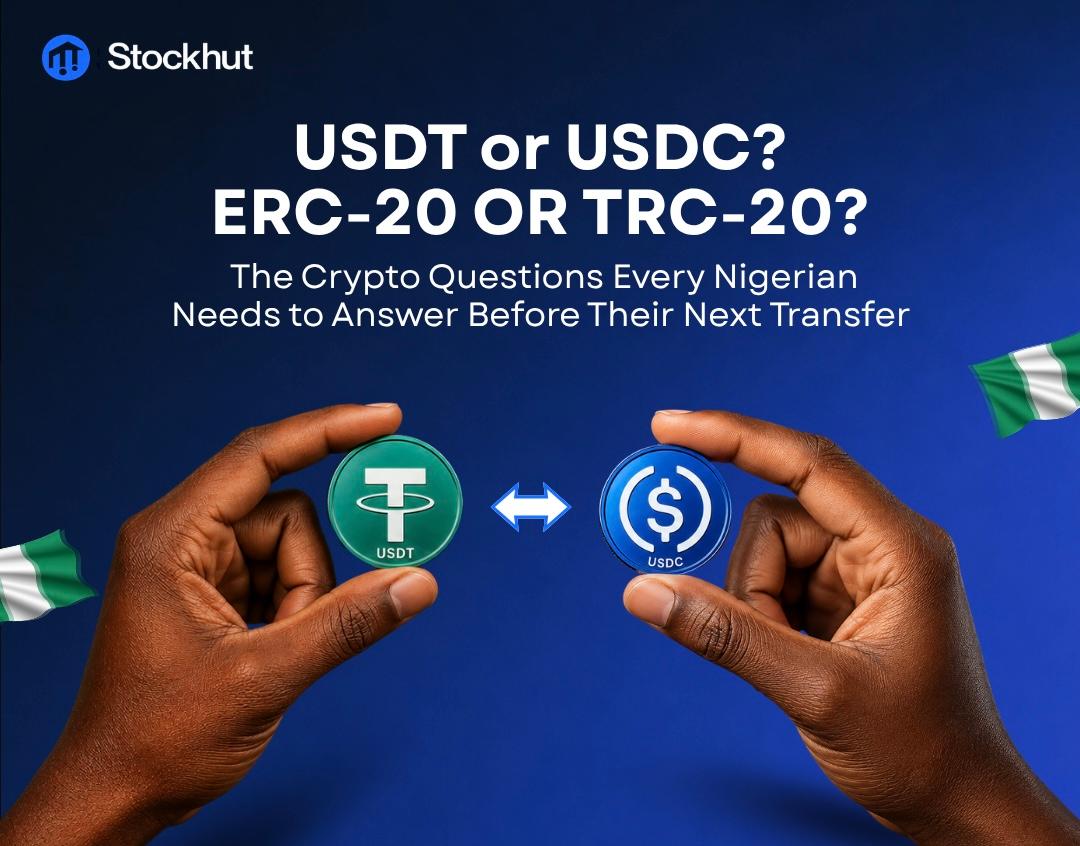
USDT or USDC? ERC-20 or TRC-20? The Crypto Questions Every Nigerian Needs to Answer Before Their Next Transfer
You are about to receive crypto. The sender asks: which network?
You stare at the options: TRC-20, ERC-20, ERC-20 again, and your heart starts beating fast because you can’t tell the difference between any of these networks. You finally pick one, and like many things, you hope you chose right.
This scenario plays out thousands of times a day across Nigeria. People moving real money on rails they do not fully understand, hoping the funds arrive and dreading the possibility that they will not. The good news is that these concepts are not complicated. They just have not been explained properly.
Consider this the explanation.
USDT vs USDC: Same Dollar, Different DNA
Before comparing them, it helps to understand what they actually are.
What is USDT?
USDT, also known as Tether, is a stablecoin issued by Tether Limited. A stablecoin is a cryptocurrency designed to maintain a steady value rather than rise and fall like Bitcoin or Ethereum. One USDT is intended to always be worth one United States dollar.
Because of its stability, USDT has become the world's most widely traded stablecoin. Millions of people use it every day to store value, send money across borders, receive international payments, and trade other cryptocurrencies without worrying about sudden price swings.
For many Nigerians, USDT has become the closest thing to holding digital dollars. Freelancers receive payments in USDT, businesses settle invoices with it, and traders use it as their preferred currency for buying and selling crypto assets.
What is USDC?
USDC, short for USD Coin, is another stablecoin designed to maintain a value of one United States dollar. It is issued by Circle and has become one of the fastest-growing regulated stablecoins in the world.
Like USDT, its primary purpose is to provide the stability of the US dollar while allowing users to enjoy the speed and accessibility of blockchain technology.
Where USDC distinguishes itself is transparency. Circle publishes independently verified reserve reports showing that every USDC token is backed by cash and short-term United States Treasury bills. This has made USDC particularly attractive to financial institutions, regulated businesses, and users who prioritize compliance and accountability.
Both USDT and USDC maintain a value close to one US dollar, making them popular for payments, savings, and crypto trading. For most Nigerians, USDT is the practical daily choice. For businesses transacting with international regulated partners or holding significant stablecoin value, USDC offers a more audited, institutional-grade alternative. Stockhut Trade supports both.
ERC-20 vs TRC-20: Same USDT, Two Different Roads
Here is where the confusion happens, and where the most money gets lost.
What is ERC20?
ERC20 is the technical standard used for tokens that operate on the Ethereum blockchain. If someone sends you USDT using Ethereum, you are receiving the ERC20 version of USDT.
Ethereum is the oldest and most established smart contract blockchain in the world. Because of this, ERC20 tokens are accepted by thousands of exchanges, wallets, and decentralized finance applications. The trade-off is cost.
Ethereum transaction fees can become expensive when network activity is high. Depending on congestion, sending USDT through ERC20 may cost anywhere between 5 and 20 United States dollars. Transactions can also take several minutes to complete during busy periods.
Despite these costs, ERC20 remains the preferred choice for users interacting with decentralized finance platforms, institutional products, and advanced blockchain applications.
What is TRC20?
TRC20 is the token standard built on the Tron blockchain. It serves the same purpose as ERC20 but operates on an entirely different blockchain.
The Tron network was designed with speed and affordability in mind. Sending USDT through TRC20 usually costs less than one United States dollar and often only a few hundred naira. Transactions are confirmed within seconds, making it one of the fastest ways to move stablecoins.
These advantages have made TRC20 the dominant network for USDT transfers across Nigeria and much of Africa. Whether people are topping up exchange accounts, paying suppliers, receiving freelance income, or converting crypto to naira, TRC20 is often the network being used.
The most important rule is simple. The network you send from must match the network the recipient expects.
An ERC20 wallet address begins with 0x.
A TRC20 wallet address begins with T.
They may both hold USDT, but they are not interchangeable. Sending funds to the wrong network can result in permanent loss because blockchain transactions cannot be reversed.
Always confirm both the stablecoin and the network before completing any transfer.
Most Nigerians will use USDT on TRC20 for almost everything, and that combination works exceptionally well. Once you understand why, you stop guessing and start moving money with confidence.
FAQ
Is USDT better than USDC?
It depends on your needs. USDT is better for everyday trading and transfers, while USDC is ideal for users who prioritize transparency and regulatory compliance.
Can I send ERC20 to TRC20?
No. ERC20 and TRC20 are different blockchain networks. Always use the network supported by the recipient.
Why is TRC20 cheaper than ERC20?
TRC20 runs on the Tron blockchain, which offers lower transaction fees and faster processing than Ethereum's ERC20 network.
Which network should Nigerians use?
For most everyday transfers, TRC20 is the preferred choice because it is faster, cheaper, and widely supported.
What happens if I send crypto to the wrong network?
You could permanently lose your funds. Always confirm both the stablecoin and the blockchain network before sending crypto.
Choosing the wrong network can delay or even permanently lose your funds. Before every transfer, confirm two things: the stablecoin (USDT or USDC) and the blockchain network (ERC20 or TRC20). Once those match, your transfer becomes faster, safer, and significantly cheaper. Whether you're receiving freelance payments, buying crypto, or converting digital assets to naira, understanding this distinction helps you avoid costly mistakes.
Trade securely on Stockhut Trade.
More Stories
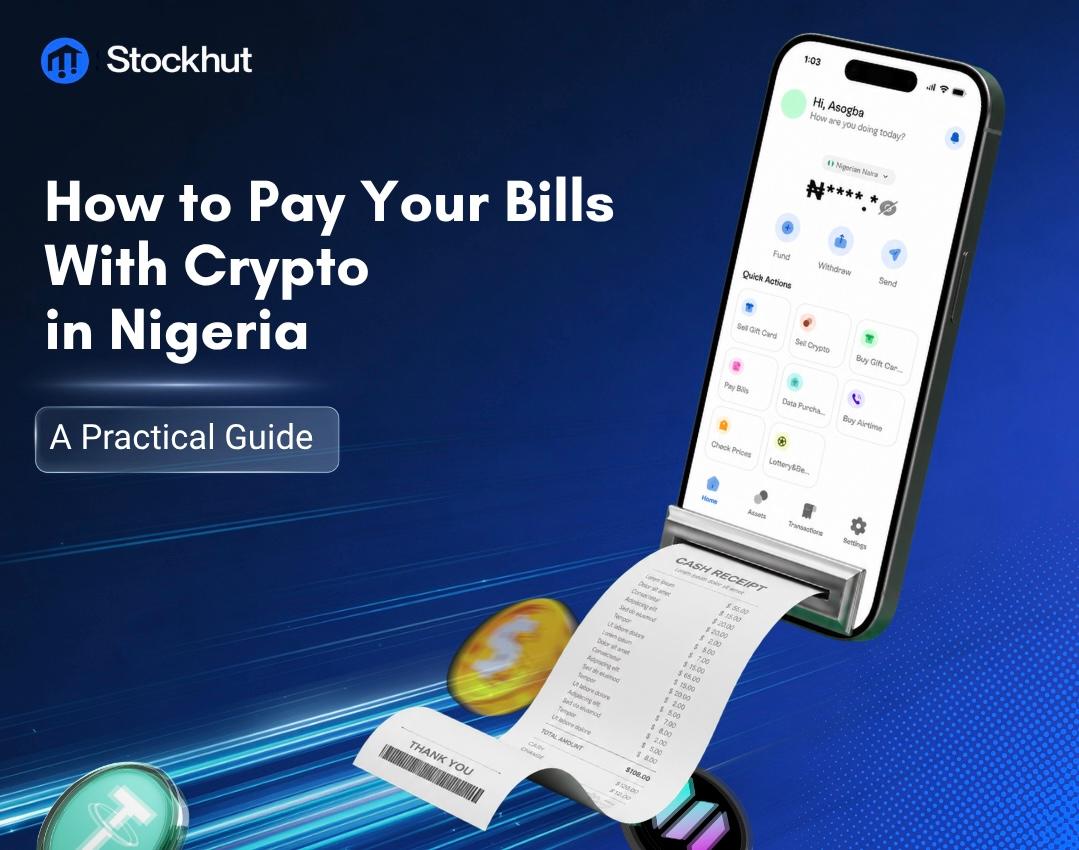
AUGUST 24, 2026
You can pay bills directly with the digital balance you already have, and this guide explains exactly how.
AUGUST 22, 2026
Have you sent crypto before? Or received it. And somewhere in that process, someone said the word wallet and you nodded along while quietly having no idea what that word meant in this context.
AUGUST 10, 2026
The Nigerian crypto platform market in 2026 is more crowded than it has ever been. Cardtonic, Quidax, Prestmit, Ricki, GCBuying, Monica, and several international platforms all compete for the same base of Nigerian users.
JULY 09, 2026
Chances are, you have come across a lot of crypto and blockchain terms and it seems unending, in this post you will learn essential crypto terms you should know